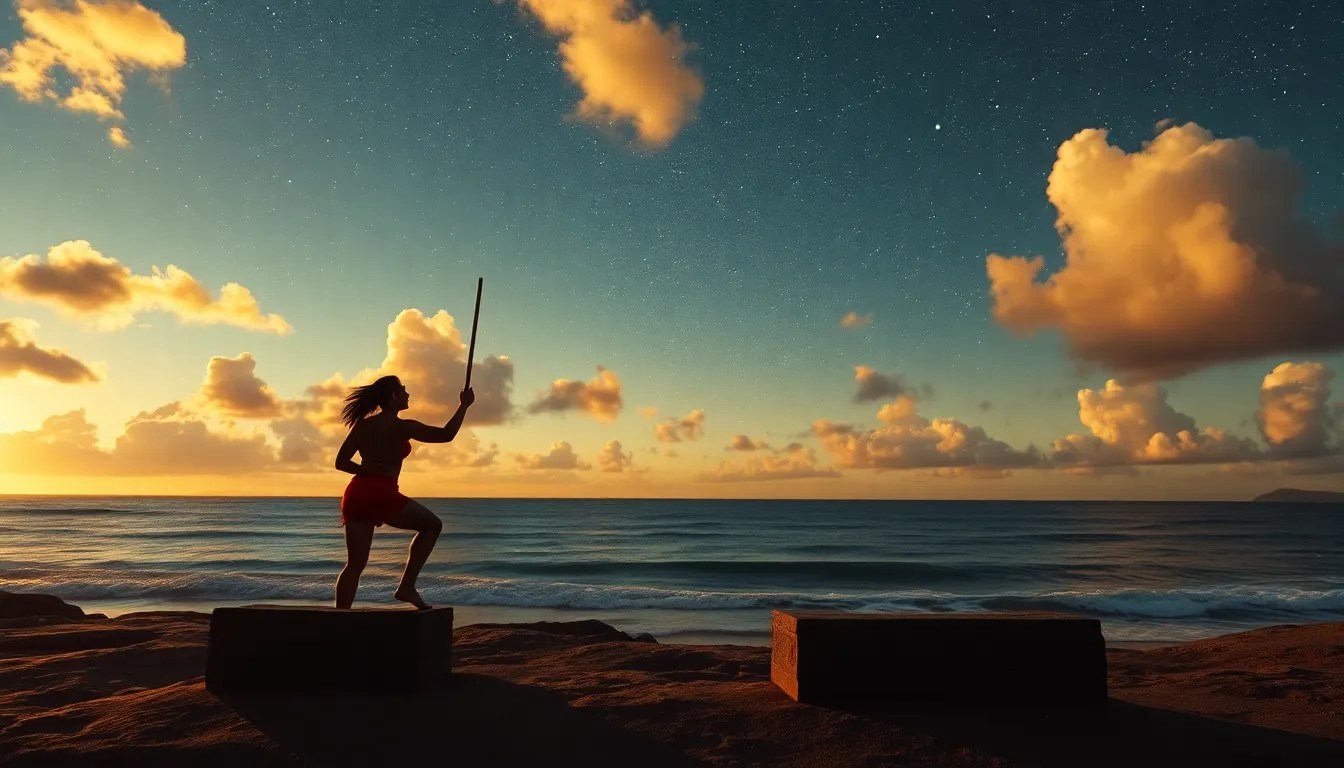
Celestial Navigation: How Ancient Polynesians Explored the Pacific Sky
I. Introduction to Polynesian Navigation
Polynesian exploration and settlement represent one of the most remarkable feats of human ingenuity and navigation in history. Spanning thousands of miles across the vast Pacific Ocean, the Polynesian islands were settled by skilled navigators who utilized sophisticated techniques to traverse the open waters. Their ability to navigate vast distances without modern instruments is a testament to their deep understanding of the natural world and their cultural connection to the sea.
Celestial navigation played a crucial role in Polynesian culture. The stars were not merely objects in the sky; they served as essential guides for navigation, allowing Polynesians to journey between islands, establish trade routes, and maintain cultural connections across the Pacific.
II. The Role of the Stars in Polynesian Navigation
The stars held significant importance in Polynesian navigation, with specific constellations serving as critical indicators for direction and time. Navigators would often look to the heavens to guide their journeys.
- Key Constellations and Their Significance:
- Taumata-awa: This is a prominent star cluster that signifies the direction of land.
- Hokule’a: Associated with the North Star, it plays a crucial role in guiding navigators in the northern hemisphere.
- Southern Cross: A vital constellation for Polynesians in the southern hemisphere, it marks the south celestial pole and assists in orientation.
The use of the Southern Cross and the North Star exemplifies how Polynesians effectively used celestial bodies to navigate the vast expanses of the Pacific. Each star and constellation was integrated into their navigation lore, allowing them to traverse the ocean with confidence.
III. Navigational Techniques and Tools
Polynesian navigators employed various traditional instruments that were integral to their exploration techniques.
- Traditional Instruments:
- Star Compass: A circular representation of the heavens that helped navigators understand the movement of stars and the cardinal directions.
- Stick Charts: These ingenious tools were made from palm fronds and shells, illustrating wave patterns and the locations of islands.
In addition to these tools, navigators also integrated their understanding of ocean currents and wind patterns. They recognized that the Pacific Ocean’s currents could guide them toward their destinations, making the journey more efficient.
IV. The Art of Wayfinding: Learning from Nature
The art of wayfinding extended beyond the stars; it involved keen observation of the natural world.
- Observing the Behavior of Birds and Marine Life:
- Navigators would watch for certain birds that indicated the proximity of land.
- Marine life, such as fish and turtles, would also offer clues about underwater geography.
- The Significance of Wave Patterns and Cloud Formations:
- Wave patterns could indicate the presence of islands or reefs.
- Cloud formations often signaled land, as different islands would affect local weather patterns.
This intimate relationship with nature allowed Polynesian navigators to become adept at reading the signs that would lead them safely to their destinations.
V. Cultural Practices and Oral Traditions
Cultural practices and oral traditions were vital in transmitting navigational knowledge across generations.
- Storytelling and Oral History:
Stories about legendary navigators and voyages were passed down orally, embedding navigational techniques within cultural narratives. These stories served both educational and ceremonial purposes.
- Rituals and Ceremonies:
Rituals related to navigation often involved offerings to the sea and stars, seeking favor and guidance for safe voyages.
Such practices ensured that the wisdom of navigation was preserved and honored within Polynesian culture.
VI. Case Studies of Notable Voyages
Several significant voyages highlight the prowess of Polynesian navigators throughout history.
- The Migration to Hawaii:
This historical migration is often cited as a prime example of Polynesian navigation, showcasing how navigators skillfully traveled thousands of miles to settle in Hawaii using celestial navigation and natural signs.
- The Voyages of the Hokule’a:
The Hokule’a, a traditional double-hulled canoe, represents the modern revival of Polynesian navigation. Its voyages across the Pacific have reignited interest in traditional navigation methods and educated many about this ancient art.
VII. Challenges and Adaptations in Navigation
Despite their remarkable skills, ancient Polynesians faced numerous navigational challenges.
- Navigational Challenges:
Vast distances, unpredictable weather, and the vastness of the ocean posed significant risks. Navigators had to be prepared to adapt to changing conditions.
- Adaptations in Techniques:
Over time, navigators developed improved techniques and tools, refining their methods based on experiences and shared knowledge. This adaptability allowed Polynesians to thrive in their oceanic environment.
VIII. Legacy of Polynesian Navigation in Contemporary Society
The legacy of Polynesian navigation continues to resonate today, with a revival of interest in traditional practices.
- Revival of Interest:
There has been a resurgence in the study and practice of traditional navigation, with many contemporary Polynesians seeking to reconnect with their ancestral ways.
- Influence on Modern Navigation:
The knowledge and techniques of Polynesian navigators have influenced modern exploration and navigation systems, showcasing the profound wisdom of these ancient navigators.
In conclusion, Polynesian celestial navigation is a remarkable blend of cultural heritage, environmental observation, and deep understanding of the cosmos. The legacy of these ancient navigators not only shaped the history of the Pacific but continues to inspire new generations of explorers and navigators today.


