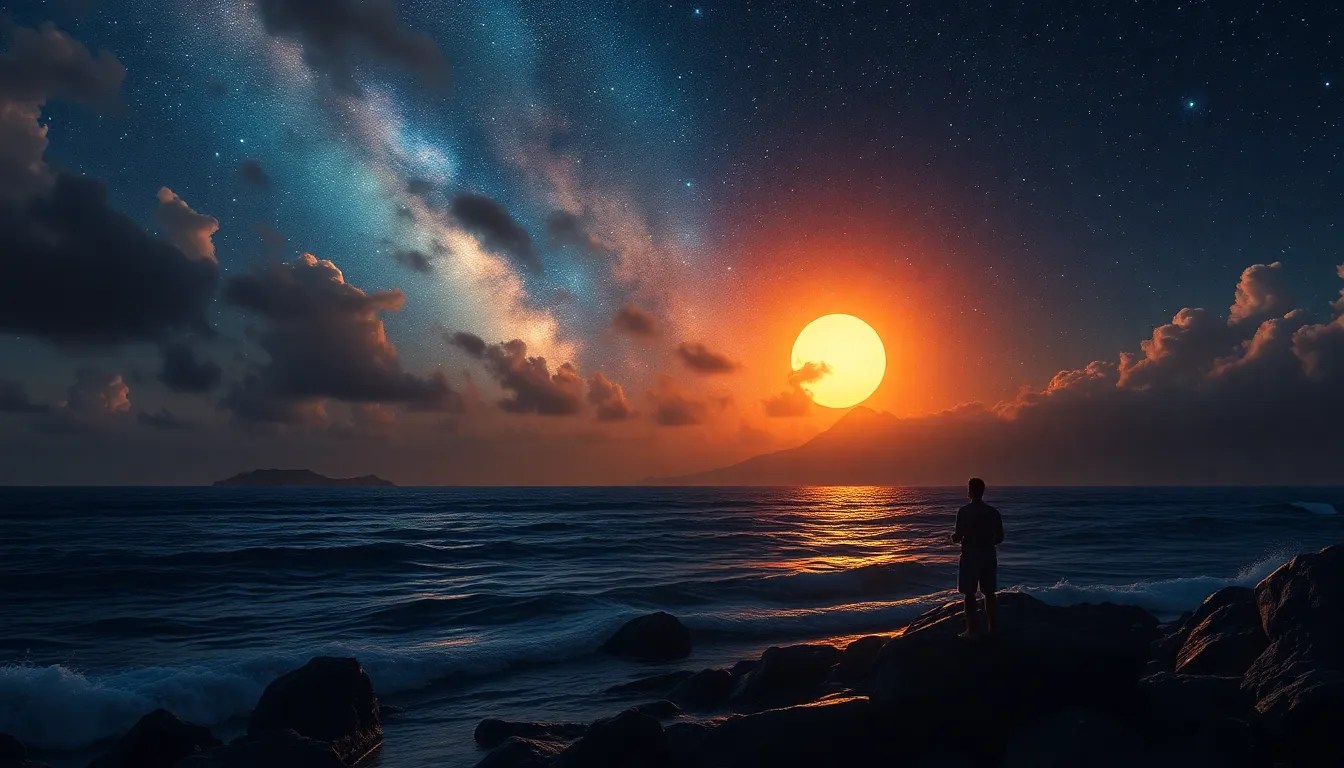
Legends of the Stars: How Polynesian Myths Explain Celestial Events
I. Introduction
Polynesian mythology is a rich tapestry of stories, beliefs, and traditions that have shaped the identities of the various island cultures across the Pacific Ocean. These myths are not merely tales of gods and heroes; they serve as a critical framework for understanding the world, including the celestial phenomena that influence daily life and navigation.
In Polynesian culture, celestial events play a vital role in navigation and agriculture. The stars, sun, and moon are not only markers of time and direction but are also intertwined with the spiritual and cultural practices of the people. This article aims to explore how Polynesian myths illuminate the understanding of the stars and their significance in the lives of the Polynesian people.
II. The Celestial Landscape in Polynesian Culture
The night sky in Polynesia is a breathtaking canvas of stars, and for ancient navigators, it was a map that guided their journeys across vast oceanic distances. The Polynesians developed intricate knowledge of the celestial bodies that governed their movements and seasonal activities.
A. Description of the night sky as perceived by Polynesian navigators
The night sky is often described as a living entity in Polynesian culture, filled with stories and meanings. Stars are not merely points of light; they are connected to the land, sea, and the ancestors.
B. Key stars and constellations in Polynesian navigation
- Polaris (Hokule’a): Used for finding true north.
- Vega (Hikurangi): Marks the time of harvest.
- Canopus (Tupaia): Important for navigation in southern seas.
C. The role of celestial events in daily life and seasonal cycles
Celestial events such as the rising and setting of specific stars mark significant times for planting and harvesting, while lunar phases dictate fishing and agricultural practices.
III. Creation Myths and the Origin of Stars
Across Polynesia, creation myths vary but often share common themes. These stories not only explain the origins of the world but also the stars and their relationships with the deities.
A. Overview of creation myths from various Polynesian islands
Many Polynesian islands have unique creation myths. For instance, in Hawaiian mythology, the goddess Hina is associated with the moon, while in Maori tradition, the star Matariki (Pleiades) signals the New Year.
B. Stories explaining the formation of specific stars and constellations
Specific stars and constellations often have dedicated myths. For example, the constellation of the Southern Cross is a significant navigational aid and holds stories of ancestral spirits navigating the seas.
C. The symbolism of stars in relation to deities and creation
Stars often symbolize the eyes of the gods watching over humanity, guiding them through trials and tribulations, reinforcing the connection between the divine and the earthly realm.
IV. Myths Surrounding the Sun and Moon
The sun and moon are central to Polynesian mythology, representing vital forces that influence life on earth.
A. Tales of the sun’s journey across the sky
In many legends, the sun is personified as a god who travels across the sky, providing light and warmth. The journey of the sun is often linked to the cycles of day and night, symbolizing the eternal battle between light and darkness.
B. The significance of the moon in agriculture and spiritual practices
The moon holds great importance in agricultural practices. The lunar phases dictate planting and harvesting times, with specific rituals performed during different phases to honor the moon’s influence.
C. Stories of lunar phases and their influence on human activities
Folklore surrounding the lunar phases often includes tales of transformation and fertility, where each phase brings different energies that affect human endeavors.
V. Constellations and Their Cultural Significance
Polynesian constellations are not just astronomical formations; they embody rich narratives that reflect the values and beliefs of the society.
A. Major Polynesian constellations and their corresponding myths
- Matariki: Represents the Pleiades and is celebrated as the New Year.
- Te Punga: Represents a fish trap and is associated with fishing practices.
B. The connection between constellations and navigational techniques
These constellations are intricately woven into the navigation techniques of Polynesian voyagers, who use them to chart courses across the ocean.
C. How these myths reflect societal values and beliefs
The myths surrounding these constellations often highlight themes of kinship, respect for nature, and the importance of community, reinforcing societal values.
VI. Celestial Events: Eclipses, Comets, and Meteor Showers
Celestial events such as eclipses, comets, and meteor showers are significant in Polynesian culture, often interpreted as omens or messages from the gods.
A. Polynesian interpretations of eclipses and their meanings
Eclipses were viewed with awe and sometimes fear, seen as signs that required specific rituals to appease the gods or restore balance.
B. Myths surrounding comets and other celestial phenomena
Comets, often viewed as harbingers of change, are woven into myths that describe their appearances as signs of impending events, such as war or prosperity.
C. The impact of these events on cultural practices and rituals
These celestial phenomena often prompted communal gatherings, rituals, and storytelling sessions, strengthening community bonds and cultural identity.
VII. The Legacy of Polynesian Astronomy
The astronomical knowledge of ancient Polynesians has left a lasting legacy that continues to influence modern navigation and cultural practices.
A. The influence of ancient Polynesian astronomy on modern navigation
Modern navigators still draw upon traditional Polynesian methods, using the stars to guide their journeys across the Pacific.
B. Preservation of myths and their relevance in contemporary Polynesian culture
As contemporary Polynesians strive to preserve their cultural heritage, these myths remain vital in teaching younger generations about their ancestral connections to the stars.
C. The role of storytelling in passing down astronomical knowledge
Storytelling is the primary means of transmitting astronomical knowledge, ensuring that the wisdom of the ancestors continues to inform and inspire future generations.
VIII. Conclusion
The interplay between Polynesian myths and celestial events offers profound insights into how these cultures understood and interacted with the cosmos. The myths surrounding the stars, sun, and moon not only enriched daily life but also reinforced community and cultural values.
As we reflect on these narratives, it becomes clear that preserving these stories is essential for future generations. They are not just historical accounts but living traditions that continue to shape the identity of Polynesian cultures today. We encourage everyone to explore the fascinating world of Polynesian mythology and astronomy, connecting with the stories that have guided navigators and nurtured communities for centuries.


