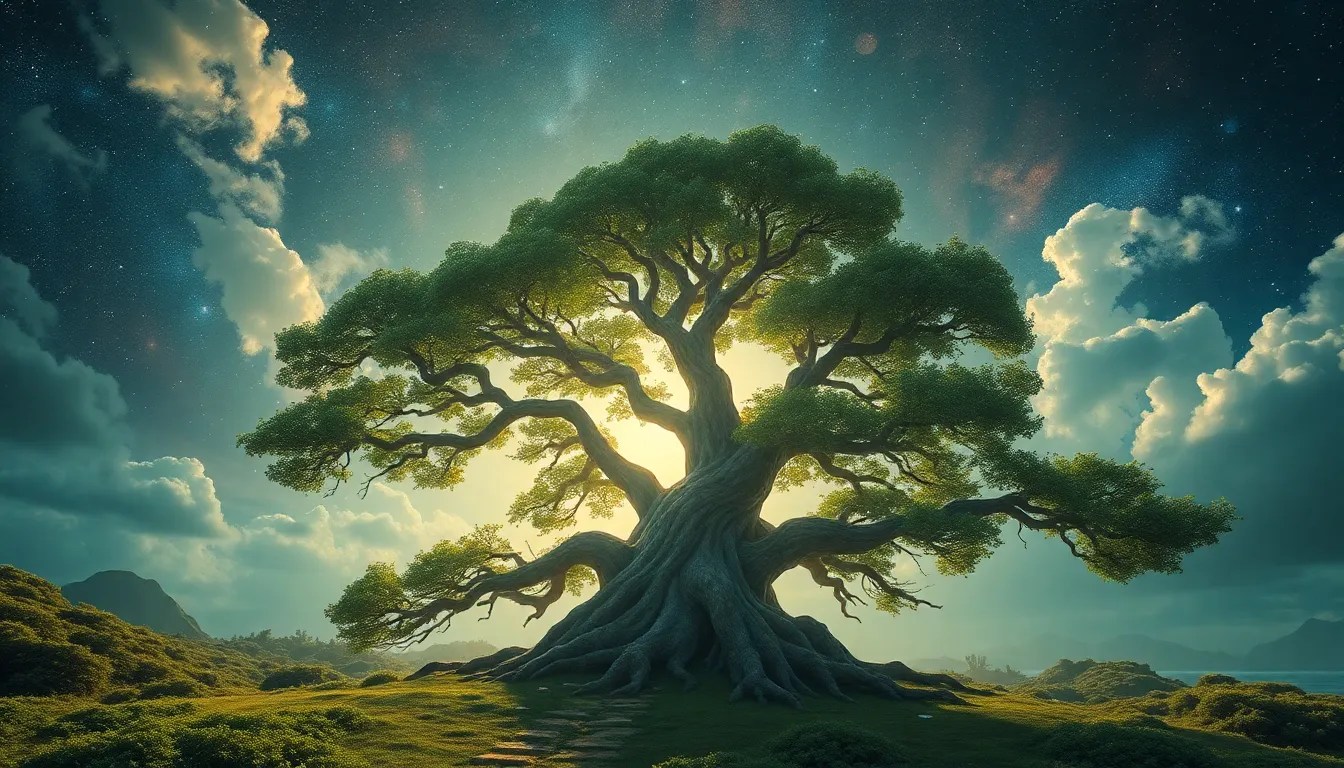
The Cosmic Tree: Polynesian Myths and the Structure of the Universe
I. Introduction to Polynesian Mythology
Polynesian mythology is a rich tapestry of stories, beliefs, and traditions that reflect the cultural heritage of the Polynesian people. It encompasses a wide range of deities, spirits, and ancestral figures, each playing a significant role in the creation and maintenance of the world. These myths serve not only as entertainment but also as vital tools for understanding the cosmos and humanity’s place within it.
Mythology is central to Polynesian culture, providing insights into natural phenomena, societal norms, and moral lessons. One of the most intriguing concepts within this belief system is the Cosmic Tree, a symbol that represents the interconnectedness of all existence. This article delves into the significance of the Cosmic Tree in Polynesian cosmology, exploring its role in various myths, its representation in art, and its relevance today.
II. The Concept of the Cosmic Tree in Polynesian Cosmology
A. Definition and symbolism of the Cosmic Tree
The Cosmic Tree, often referred to as the World Tree, symbolizes the axis mundi—the center of the universe that connects different realms. In Polynesian cosmology, this tree embodies the connection between heaven, earth, and the underworld, serving as a bridge that facilitates the flow of life and energy between these realms.
B. Comparison with other cultural representations of the Cosmic Tree
Similar to the World Tree in other cultures, such as Yggdrasil in Norse mythology or the Tree of Life in various traditions, the Cosmic Tree in Polynesian beliefs serves as a powerful symbol of creation and interconnection. While each culture’s representation may differ, the underlying themes of unity and the cycle of life remain consistent.
C. The Cosmic Tree as a connector of realms (heaven, earth, and underworld)
The Cosmic Tree is viewed as a sacred entity that links the three realms:
- Heaven: The realm of the gods, where divine beings reside.
- Earth: The physical world inhabited by humans and creatures.
- Underworld: The domain of ancestors and spirits that influence the living.
This triadic structure illustrates the cyclical nature of life, death, and rebirth, emphasizing the importance of each realm in maintaining cosmic balance.
III. Key Myths Featuring the Cosmic Tree
A. The story of Tane Mahuta and the creation of the world
One of the most prominent myths involving the Cosmic Tree is the story of Tane Mahuta, the god of forests and birds. According to legend, Tane Mahuta created the first woman from the earth and breathed life into her. This act of creation established the Cosmic Tree as a central figure, representing life’s origin and the interconnectedness of all beings.
B. The role of the Cosmic Tree in the legend of Hina
In the legend of Hina, the Cosmic Tree plays a significant role in the transformation of Hina into a goddess. Hina’s connection to the tree symbolizes her growth and the nurturing aspect of nature. The tree serves as a metaphor for her journey, illustrating how one can rise and flourish through connection with the earth and the divine.
C. Other significant myths and their interpretations relating to the Cosmic Tree
Other myths feature the Cosmic Tree, including tales of heroes who seek wisdom or guidance from its branches. These stories often highlight themes of growth, knowledge, and the importance of maintaining a harmonious relationship with nature. Each myth provides a unique perspective on the Cosmic Tree as a source of life and spiritual nourishment.
IV. The Structure of the Universe in Polynesian Beliefs
A. Description of the celestial hierarchy in Polynesian mythology
Polynesian mythology presents a celestial hierarchy that emphasizes the relationship between gods, humans, and the natural world. The Cosmic Tree stands at the center of this hierarchy, symbolizing the interconnectedness and interdependence of all elements within the universe.
B. The relationship between gods, humans, and nature
In this belief system, gods are seen as guardians of the natural order, while humans are tasked with maintaining harmony with nature. The Cosmic Tree acts as a reminder of this relationship, illustrating how each entity supports the others in a delicate balance.
C. The Cosmic Tree as a metaphor for the interconnectedness of life
The Cosmic Tree serves as a powerful metaphor for life’s interconnectedness. It reminds us that every action has consequences, and that the health of the environment directly impacts humanity’s well-being. This understanding fosters a sense of responsibility toward the natural world.
V. The Cosmic Tree in Oral Traditions and Art
A. Representation of the Cosmic Tree in Polynesian art and tattoos
The Cosmic Tree is frequently depicted in Polynesian art, including carvings, paintings, and tattoos. These artistic representations often emphasize the tree’s role in connecting different realms and its importance in the cultural narrative.
B. Oral traditions and storytelling practices surrounding the Cosmic Tree
Oral traditions play a crucial role in preserving the stories of the Cosmic Tree. Storytellers often recount these myths during gatherings, ensuring that the teachings and significance of the Cosmic Tree are passed down through generations.
C. Modern interpretations and the preservation of these myths
In contemporary times, artists and writers continue to draw inspiration from the Cosmic Tree, reinterpreting its symbolism in various forms. This revival helps to keep the myths alive and relevant, fostering a deeper appreciation for Polynesian cultural heritage.
VI. Comparative Mythology: The Cosmic Tree in Other Cultures
A. Similarities and differences with other cultural cosmic trees (e.g., Yggdrasil, the Tree of Life)
When comparing the Cosmic Tree of Polynesian mythology with other cultural representations, such as Yggdrasil in Norse mythology and the Tree of Life in various traditions, we find both similarities and differences. Each tree serves as a symbol of creation, connection, and life. However, the specific narratives and cultural contexts surrounding these trees vary widely.
B. The universal themes of creation and connection
Despite the differences, these cosmic trees embody universal themes of creation and connection. They reflect humanity’s desire to understand the cosmos and our place within it, illustrating how cultures approach similar existential questions through their mythologies.
C. Insights gained from comparing Polynesian beliefs with those of other cultures
Studying the Cosmic Tree across cultures provides valuable insights into shared human experiences and values. It highlights the importance of nature in shaping cultural identity and emphasizes the need for stewardship of the environment.
VII. Contemporary Relevance of the Cosmic Tree
A. The Cosmic Tree in modern Polynesian identity and cultural revival
The Cosmic Tree continues to play a significant role in modern Polynesian identity. As communities seek to revive and reclaim their cultural heritage, the tree serves as a powerful symbol of resilience, unity, and cultural pride.
B. Environmental symbolism and ecological consciousness
In contemporary discussions about environmental issues, the Cosmic Tree represents a call to action for ecological consciousness. It serves as a reminder of the interconnectedness of all life forms and the importance of preserving natural ecosystems.
C. The Cosmic Tree as a source of inspiration in contemporary art and literature
Today, the Cosmic Tree inspires artists and writers who explore themes of identity, belonging, and nature. Its enduring symbolism resonates with contemporary audiences, fostering a deeper connection to Polynesian mythology and its teachings.
VIII. Conclusion
In conclusion, the Cosmic Tree holds significant importance in Polynesian mythology, representing the interconnectedness of all life and the structure of the universe. Through various myths, artistic representations, and oral traditions, this symbol continues to influence modern cultural identity and environmental consciousness.
The ongoing relevance of the Cosmic Tree encourages us to explore Polynesian mythology further, offering profound insights into our universe and the relationships that bind us all together. As we reflect on these teachings, we can appreciate the wisdom of ancient cultures and their understanding of life’s intricate web.


